


Chongqing Qianjiang Airport
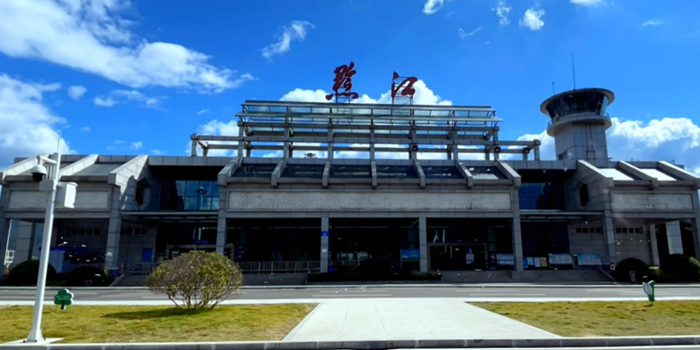
Qianjiang Airport is located in Qianjiang District, in the heart of the Wuling Mountains and at the center of southeastern Chongqing. As an important component of Chongqing’s airport network, it is positioned by both the national and municipal governments as “an important aviation gateway and tourism transfer hub for the Wuling Mountains.” The airport serves approximately 6 million people across southeastern Chongqing and nearby areas of Hunan, Hubei, and Guizhou, a region rich in tourism resources.
Qianjiang Airport was completed in April 2010 and officially opened to commercial traffic on November 22 of that year. It is a 4C regional civil airport, with a 2,400-meter runway, 11 Code C aircraft stands, two perpendicular connecting taxiways, and a terminal building of nearly 15,000 square meters. The airport is equipped with advanced communications, navigation, meteorological, and other key air traffic management facilities for a regional airport in China. It can accommodate Boeing 737-series, Airbus A320-series, and smaller passenger aircraft. In 2015, it was named “China’s Best Regional Airport for Tourism.” The airport currently operates routes to Beijing, Shanghai, Guangzhou, Chongqing, Chengdu, Kunming, Quanzhou, Guilin, Hefei, Lhasa, and other cities. Through the continued development of the “Chongqing Fly · Qianjiang Express” service, it has begun to establish a one- to two-hour air travel network linking Qianjiang with China’s major economic regions.
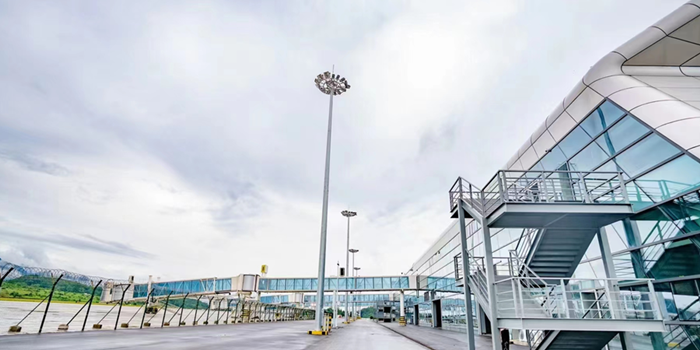
An expansion and renovation project was launched in 2017, including a 12,000-square-meter terminal building, seven aircraft stands, and supporting facilities and equipment, with a total investment of nearly RMB480 million. The project officially entered service in mid-April 2023, significantly increasing the airport’s transport capacity. It is designed to handle 700,000 passengers annually in the near term and up to 3 million annually in the longer term. Looking ahead, plans call for the development of airport port-of-entry facilities and an extension of the runway when appropriate, as well as new routes to Shenzhen and Xiamen and the restoration of services to Wenzhou, Zhengzhou, Hangzhou, and other destinations. The airport aims to strengthen its roles as a gateway for transportation, tourism, and trade; develop into an important aviation gateway and tourism transfer hub for the Wuling Mountains; reinforce Qianjiang’s position as an integrated transportation hub for southeastern Chongqing and the wider Wuling Mountains region; and support its development into a regional center serving the border areas of Chongqing, Hubei, Hunan, and Guizhou.
